|
Previous Articles 1
Previous Articles 2 Biography - F.A. Baron Freedom to be Greedy Farewell & Welcome DA Response to Grenada And, We were Misled Local vs Privy Council Political Pappyshow Thank You Dame Eugenia Big Bad John Travels and Travails Tsunami Catastrophe Trade Gap - USA & DA In Case You Missed It Distance Yourself ".. Your Love to Town" Mad Men not to be trusted Politics of Lies & Deception More Madness Undesirable Democracy Wide, Deep Transparency Petrocaribe $ Bird Island Nations Shall War No more My Feeling of Insecurity China, Admiration & Envy Capitalism: Wounded ... © Gordon Moreau |
Three Sets of Events
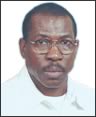
"HIS EXCELLENCY, FRANKLIN ANDREW BARON A biography of Dominica's First Chief Minister THE MAN, THE MYTH AND THE MISSION" By Irving W. Andre (Pond Casse Press, 286 pages including two pages of Select Bibliography.) (September 21, 2003) The book is introduced with a gaiety in the use of language sufficient to motivate me to read it relatively quickly. For better information of readers who read only the first, and perhaps the middle and last paragraphs of any writing, let me commend it to you. The book is worth the reading and especially the buying.
Let us put it out of the way, there are some errors that should be corrected at the second edition:
ADVICE FROM HIS FATHER "Baron the elder, instilled in his son the idea that political involvement carried few rewards; that it was a thankless job." (page 26). Mr. Frank Baron respected that counsel but only until his father's death. Perhaps it is a good thing he disregarded it because he did make a contribution. Today I still wonder what is it that lure poor people into politics. Far from being the road to prosperity, it is for some the road to more poverty and even to prison. For others it is the first communion with ill-health, heart attack and death. From my own consistent writings it is easy to support the position taken by Mr. A.A. Baron concerning World War II: those powers treat black people very shabbily in their metropolis. "Let them fight their own wars", (page 36), said A.A. Baron to his son. I approve. SOCIAL CLASS DYNAMICS I have always had a problem, and this book has brought me a little closer to understanding some of the social/political dynamics of those times: "When the Moyne Commission visited Dominica in 1940…, Loblack and Ralph Nicholls took the Commissioners on a tour of Pound and Ballahou Town, to show them the appalling living conditions in those areas. On January 1, 1945,……the island's first trade union was formed with Nicholls, Loblack, Austin Winston and Thomas Christian elected" as officers. (Pages 45/46). My instinct tells me that those men could not have been of the same "social class". They were not homogeneous. So that both "gwo bourg" and "malewe" appears to have gotten together at that time in order to effect change. "Nicholls died in 1945 and paved the way for the separation of the forces for constitutional reform on the island and mass politics in Dominica in the following decade. The repercussions of the separation are that in the 1950s, those who had borne the torch for constitutional reform…were derided as oppressors who had kept workers in a state of bondage…" By 1957, "Baron would be painted and tarred as the great oppressor; the Labour Party would be hailed as a political savior and by 1961, would supplant Baron as the party which carried the hopes and aspirations of the Dominican people." (Page 46). Suffice it to say here that important historical events should be seen and written in different perspectives; especially so because politicians tend to see no virtue in their opponents - only evil. ANECDOTE But there are admirable qualities in Mr. F. A. Baron. We may begin with this anecdote. One Mr. Foley visited Dominica to discuss banana purchases for export. Baron was a director and negotiator of the Banana Association. Charles Beausoliel was its lawyer. Baron's business activities included the manufacture of marmalade. He rented some land on the Green's estate at Canefield for that purpose. Raw materials included the skin of limes obtained from J. B. Charles at Wall House Estate. The skins were placed in brine for preservation until ready to be processed. One Friday in June or July 1949, Baron and "Beau" picked up some skins from Charles' estate and transported them to Canefield. They unloaded the skins, and with pants rolled up and muddy boots, proceeded to shovel the lime skins into the vats, prior to processing. While toiling, Daniel Green, accompanied by Foley, arrived on a visit to see Green's extensive agricultural works and his citrus processing factory. Foley engaged Baron and Beau in conversation which inevitably turned to bananas. He later exclaimed to Daniel Green: "Good heavens Daniel, you have jolly intelligent labourers!" Foley almost suffered a fit when days later, he faced the now suited Baron and Beau to negotiate Antilles Products Ltd. purchase of Dominican bananas! (Pages 48/49). IF YOU FALL, WAKE UP Let this be one illustration among the many in the book that Mr. Baron did not merely inherit property and sit on his laurels or on his behind. He "toiled prodigiously" to increase on his inheritance. Even in face of three political defeats and several financial crises, he tended to pick himself up and carry on. WHAT ELSE IS NEW? Today we still speak of
FEDERATION In 1954 the majority in the Legislature supported a plan for federation. Baron argued against it but his argument made some sense:
Baron further proposed, if Federation is resolved: "The benefit of having the capital should go to the least capable of these islands to maintain themselves since some revenue is bound to come to that island, and I think that that would be a strong case in asking that Dominica be considered for the capital." It is instructive that when Jamaica was asked to make a determination, its people said "NO" to federation. It is also instructive that Dr. Eric Williams once wrote that the British should have imposed federation on us all because it was essential; we should not have been given a choice. ANOTHER ANECDOTE Before I offer myself to be considered for electoral office I would like to have some means - such as Baron or say, J. B. Charles had to fall back on. Concerning the latter, Mr. Phillip Alleyne told me this anecdote. It is not in Mr. Andre's book, but it is pertinent. J. B. Charles, at a meeting at Newtown told his audience that people should not vote for him merely in hope that their children would be thus enabled to hop on his vehicle and take away his grapefruits. If that was their expectation, then they should not vote for him. He was already facilitating several parents by paying certain school fees. That was all he could do by way of personal charity. J. B. Charles did not win the seat. But he would have won my vote for personal integrity. Most politicians whose livelihood is determined by the vote tend to lose that key-quality and make promises they cannot keep. (The review is to be continued). |